Currently Empty: AED 0.00
Meet Your Drishti Point and Cultivate Inner Awareness
0 Comments
Meet Your Drishti Point and Cultivate Inner Awareness
A drishti point is a focused gazing technique used in yoga and meditation to stabilize the mind and balance the body. In Sanskrit, drishti means “gaze” or “sight” and “focus”. By anchoring your vision on a single, unmoving point, you prevent your eyes from wandering, which quietens thoughts and reduces external distractions.
In a modern world filled with constant visual stimulation and digital distractions, finding a sense of inner stillness can feel nearly impossible. Even on a yoga mat, the mind frequently wanders, tracking the movements of others or scanning the room. In yogic philosophy, the ancient sages developed the drishti method as a specific tool to counter restless thoughts and wandering eyes and minds through sensory withdrawal and cultivating inner awareness.
The Philosophy and Science Behind the Gaze
To understand drishti, it helps to explore how the eyes interact with the mind. In yoga tradition, the eyes are considered the windows to the ego and the primary gateway through which we consume the external world. Where the eyes go, attention naturally follows. This is a concept known as Prana (vital energy) flowing toward the object of sight.
When your eyes wander aimlessly across a room, your brain is forced to process an overwhelming amount of data: a stray dust mote, someone else’s posture, or a clock on the wall. This constant processing triggers micro-thoughts, judgments, and distractions.
By anchoring the eyes to a single, unmoving point, you intentionally limit this sensory input. In the classical system of Ashtanga Yoga, drishti is an essential pillar of practice, directly supporting two limbs of Patanjali’s teachings of the Eight Limbs of Yoga:
- Sensory Withdrawal (Pratyahara): By tuning out surrounding visual stimuli, you draw your awareness away from external environments and redirect it inward.
- Concentration (Dharana): Fixing the gaze trains the mind to hold a single point of focus, which acts as the crucial gateway to deep meditation (Dhyana).
Patanjali was an Indian philosopher and writer who is best known as the “father of yoga”. About his life there are not much details available, scholars believe that he had lived between the second century BCE and the fourth century CE. His yoga teachings made him a highly respected and famous Yogi and sage even in the modern world. Patanjali’s compilation of the “Yoga Sutras”, which structure classical Raja Yoga and outline the Ashtanga, the eight limbed path of mental and spiritual discipline, form still nowadays the basis of the yogic education. Grandmaster Patanjali is also credited in tradition with contributing to texts on Sanskrit medical science and Ayurveda, such as the Patanjalatantra.
Mental, Physical and Energetic Benefits of Practicing Drishti
Integrating a focused gaze into your daily practice offers profound benefits that span across physical, mental, and energetic levels.
- Stress Relief:
Softening your gaze signals the nervous system to relax, lowering overall stress and anxiety during your practice. A hard, intense stare triggers a fight-or-flight response. Conversely, drishti demands a “soft gaze” which is relaxing the muscles around the eye sockets and unfocusing peripheral vision. This soft focus down-regulates the sympathetic nervous system, slowing down racing thoughts and inducing a state of deep neurological calm.
- Mental Clarity:
Fixing your gaze on a drishti point helps to quiet mental chatter and stops the eyes from wandering to distractions, it calms the restless mind.
- Deep Concentration:
Training your eyes to gently focus with a soft gaze on an unmoving, static point serves as a practical tool for dharana (concentration), helping you transition into a deeper meditative state.
- Mindfulness:
Focusing your soft gaze on an unmoving point single point supports the sensory withdrawal from outside distractions and helps cultivating inner awareness and mindfulness.
- Physical Stability:
Fixing your sight on a static point gives your nervous system a reliable spatial anchor, instantly stabilizing your physical foundation.
- Balance:
The brain relies heavily on visual cues to maintain spatial awareness and physical equilibrium. When you attempt a balancing posture like Tree Pose (Vrikshasana) while looking around, your center of balance falters. Focusing on the drishti point therefore helps maintaining balance.
- Structural Alignment:
Your head and neck automatically follow the line of your sight. If you look down during an upward stretch, you collapse the cervical spine. Using the correct drishti automatically adjusts the position of the head, throat, and spine, ensuring safer and more efficient posture mechanics.
- Conservation of Energy:
In yogic philosophy, uncontrolled looking drains your energy; anchoring your eyes keeps your vital energy (prana) from leaking outward, preserving your internal strength for your practice and self-reflection.
The System of Nine Traditional Drishti Points Paired with Specific Asanas
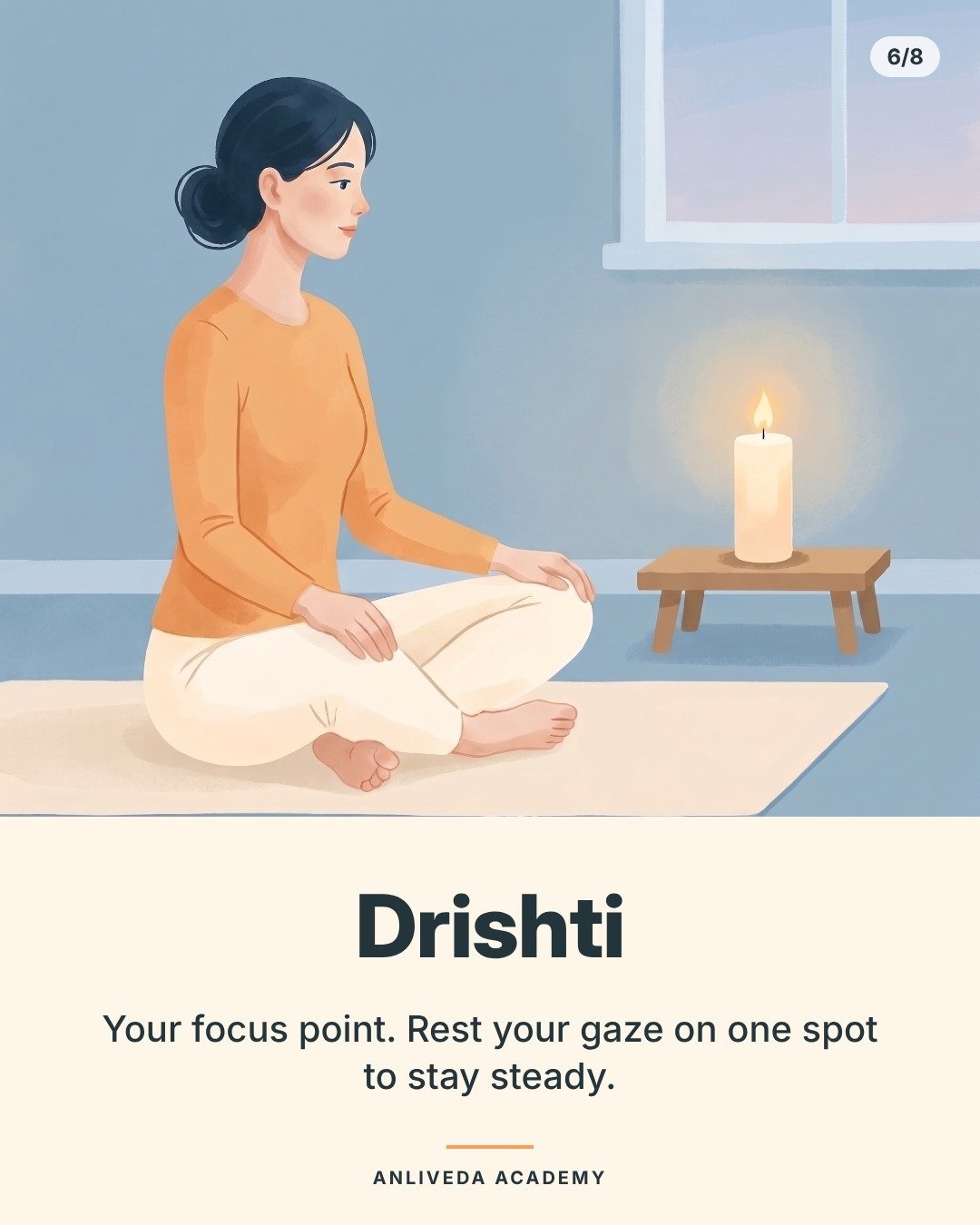
In classical yoga exercises the most common drishti point is the nose tip, alternatively gazing on an imaginary point in front or focusing the soft gaze on the flame of a candle. In some yogic teachings, especially elaborated in the Ashtanga Yoga, specific poses are paired with one of nine distinct points where to focus the gaze. Mastering these points in combination with the specific Asana refines the structural and energetic intent of each posture. The pairing of the nine drishti points with the related yoga poses is as outlined here:
- Nose Tip Nasagrai Forward Folds (Uttanasana), Upward-Facing Dog (Urdhva Mukha Svanasana)
- Third Eye Bhrumadhya Seated Meditation, Fish Pose (Matsyasana), Reverse Warrior
- Navel Nabhi Chakra Downward-Facing Dog (Adho Mukha Svanasana)
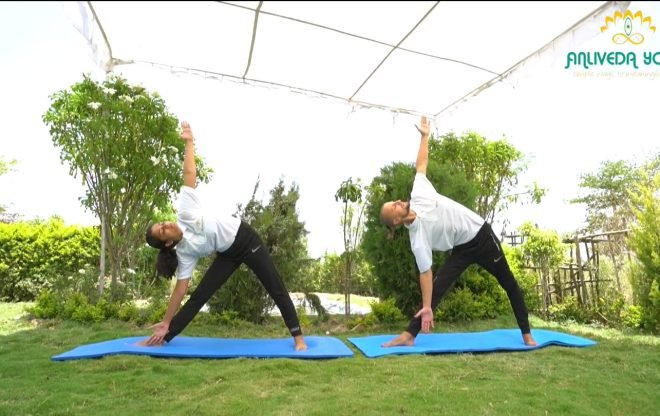
- Hand / Fingertips Hastagrai Warrior II (Virabhadrasana II), Triangle Pose (Trikonasana)
- Toes Padayoragrai Seated Forward Bend (Paschimottanasana)
- Thumbs Angushthamedhyam Chair Pose (Utkatasana), Sun Salutation arm extensions
- Far Right Parshva Drishti Seated or Standing Spinal Twists (looking right)
- Far Left Parshva Drishti Seated or Standing Spinal Twists (looking left)
- Upward / Sky Urdhva / Antara Side Angle Pose (Utthita Parsvakonasana)
How to Practice Drishti: A Step-by-Step Guide
Whether you are holding a difficult yoga pose or sitting quietly in meditation. Practicing drishti as advanced yoga practitioners it will require a delicate balance of effort and ease (sthira and sukha). For beginners the following easy steps may be helpful to develop a proper gazing technique:
Step 1: Establish Your Posture
Before focusing your eyes, settle into your physical foundation. Ensure a comfortable sitting position where your feet or sit-bones are grounded and your spine is long.
Step 2: Select Your Point of Focus (Drishti Point)
Focus your eyes on an unmovable point like a steady spot on the floor or wall or the flame of a candle directly in front of you. If you are in a traditional yoga pose, reference the Nava Drishti chart above to select the intended point.
Step 3: Soften Your Gaze
This is the most critical step. Do not glare or stare aggressively at the target. Instead, invite a “soft focus.” Relax the eyelids, smooth out the skin between your eyebrows, and un-clench your jaw. Imagine you are looking through the point rather than staring at it.
Step 4: Cultivate Inner Awareness
While your direct vision remains anchored to your chosen spot, allow your sensory withdrawal from the outside sinking into inner calmness while quieting the mind.
Step 5: Breathe and Reset
If your mind wanders, your eyes will likely follow suit. When you notice your gaze drifting to another object in the room, gently catch yourself without judgment. Take a deep breath, and quietly return your vision to your drishti point.
Drishti in Daily Life
The drishti point exercise is part of classical yoga. Many yoga practitioners love it for its good results in gaining inner awareness and strengthening concentration and focus. Drishti is also an often underestimated tool in stress management as softening your gaze signals the nervous system to relax, this lowers almost instantly stress levels and anxiety.
Drishti transforms yoga from a series of physical exercises into a mindfulness meditation. By training the eyes to stay still, you ultimately train the mind to do the same. Over time, the stability and focus you cultivate on the yoga mat through drishti will ripple out into daily life, allowing you to move through a chaotic world with an unwavering sense of clarity, purpose, and inner peace.
By Anliveda Academy